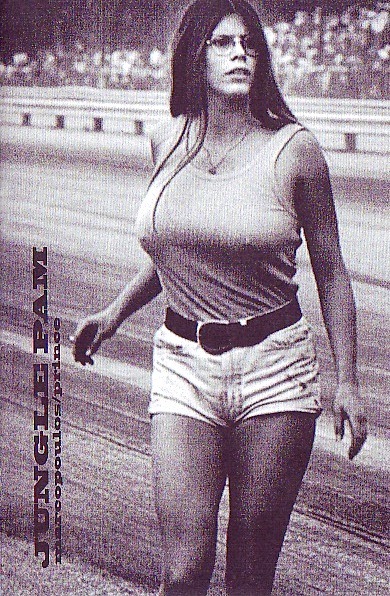
Jungle Pam Hardy: The Iconic Beauty of 1970s Drag Racing
Few personalities in American motorsports history left an impression quite like Jungle Pam Hardy. With her unmistakable style and magnetic stage presence, she became one of the most recognizable figures of the 1970s drag racing era.
But who was Jungle Pam, and why does her legacy continue to thrive decades later?
Although her time on the professional drag racing circuit lasted only four years, her impact on NHRA drag racing culture, automotive history, and racing fandom remains powerful nearly half a century later.
The Golden Age of Drag Racing
The 1970s are often described as the golden era of American drag racing, when drivers relied more on instinct and mechanical skill than computerized data systems. It was loud, raw, and thrilling.
In that environment, Jungle Pam stood out.
Wearing her trademark shorts and tank tops, she became known for backing up the Funny Car of her partner, the legendary Jim Liberman, better known to fans as “Jungle Jim.” Together, they created one of the most recognizable partnerships in motorsports entertainment.
Fans didn’t just come for the horsepower—they came for the show.
How Jungle Pam Met Jungle Jim
Pamela Hardy’s life changed in May 1972, just weeks before her high school graduation.
Liberman reportedly spotted her while she was hitchhiking, and the encounter altered her future plans. She had been accepted to West Chester University of Pennsylvania, where she intended to study business. Instead, she joined Liberman on the road.
She later recalled that her decision surprised her family, but she embraced life on the drag racing circuit.
As Liberman toured nationally, his flamboyant showmanship made him one of the sport’s biggest attractions. Pairing his personality with Pam’s striking presence proved to be a media-savvy move. Crowds responded instantly.
More Than a Pretty Face
While many remember Jungle Pam for her looks and confidence, she played a hands-on role in race day operations.
Her responsibilities included:
Staging the Funny Car at the starting line
Checking for fluid leaks
Refilling engine fluids
Packing parachutes after runs
Assisting with post-burnout positioning
She was actively involved in the team’s performance and presentation. In interviews, Pam emphasized that their success wasn’t about her alone—it was about teamwork and putting on a memorable show for fans.
Her rising popularity led to a historic moment when she appeared on the cover of Hot Rod Magazine, becoming the first woman featured solo on the magazine’s cover. That milestone cemented her place in automotive culture.
A Tragic Turning Point
On September 9, 1977, tragedy struck.
Liberman was driving his 1972 Corvette at approximately 250 mph when he collided with a bus during a racing event. He was just days away from his 32nd birthday.
The accident sent shockwaves through the motorsports community. In the aftermath, Pam stepped away from professional drag racing and chose not to work with another driver.
She remained dedicated to preserving Liberman’s legacy, attending tribute events and keeping his memory alive among racing enthusiasts.
Life After the Spotlight
After leaving the national circuit, Pam continued to stay connected to the sport she loved. She later married Funny Car owner Fred Frey, and later Bill Hodgson, who has been involved in Nostalgia Funny Car racing.
Despite stepping back from center stage, she maintained a presence within grassroots racing communities and classic car events.
When asked whether she ever considered racing herself, she was direct: she preferred supporting the team rather than getting behind the wheel of machines capable of explosive power.
Why Jungle Pam Still Matters Today
Looking back at vintage drag racing photography from the 1970s is like opening a time capsule of classic American car culture. The roaring engines, burnouts, chrome finishes, and packed grandstands defined an era.
Jungle Pam helped expand the sport’s appeal. At a time when motorsports was overwhelmingly male-dominated, she earned respect not just for her appearance, but for her professionalism and authenticity.
Her influence demonstrates that motorsports is about more than speed—it’s about personality, teamwork, branding, and fan engagement.
Now in her late 60s, Pam Hardy lives a quieter life while remaining connected to the drag racing world. Fans still approach her at events, eager to share stories and memories from the glory days of Funny Car racing.
Her legacy endures because she represented more than style—she symbolized an era when racing felt personal, thrilling, and community-driven.
For many motorsports fans, Jungle Pam will always represent the spirit of classic drag racing: bold, unforgettable, and uniquely American.