I suddenly became aware of a fairly basic aspect that I had previously entirely missed. It’s one of those little things that, once you see it, appears apparent but, for some reason, stays ignored for years until someone brings it up or you discover it on your own.
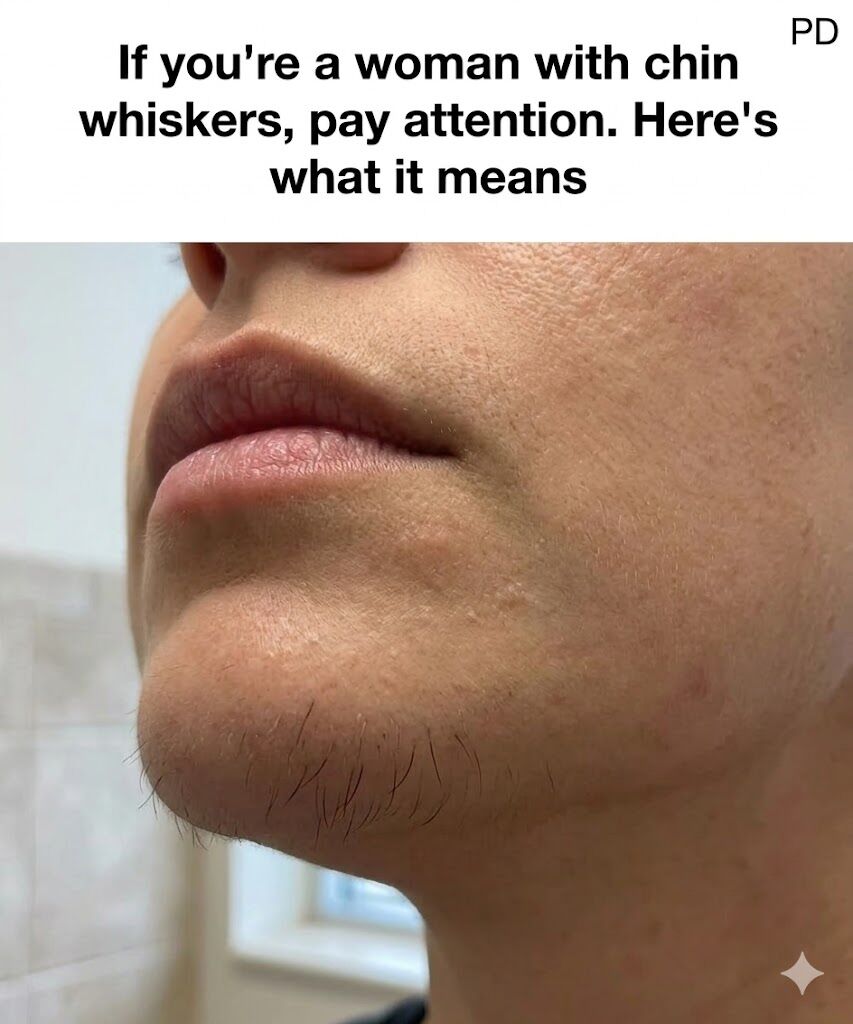
Chin whiskers are more common in women than many people realize, yet they remain a topic that is often misunderstood or rarely discussed openly. Many women first notice a few small hairs on their chin at some point in adulthood and may feel surprised or even concerned. In reality, facial hair growth in women is a normal biological occurrence that varies widely from person to person. Some women may see only a few fine, light hairs that are barely noticeable, while others may experience darker, thicker strands that appear more prominently. The presence of chin hair does not automatically indicate a health problem. Instead, it is usually part of the natural diversity of the human body. Cultural expectations about beauty have historically emphasized smooth, hair-free skin for women, which can make chin whiskers seem unusual or embarrassing. However, when viewed from a biological perspective, they are simply another form of body hair. Learning that many women share this experience can help reduce unnecessary worry and create a healthier, more accepting understanding of normal physical changes.
Chin hair has a multi-stage natural development cycle, much like all other hair on the human body. The hair actively develops from the follicle during the first stage, which is referred to as the growth phase. Depending on the person and the particular bodily part, this period may take weeks or months. The hair stops growing and gets ready to separate from the follicle during the transition period that follows. The resting phase is the last stage, during which the hair gradually falls out and the follicle starts getting ready for a new growth cycle.
Because each follicle operates independently, hair growth appears continuous even though individual hairs are constantly cycling through these stages. The thickness, color, and speed of hair growth can vary based on several biological influences. Some follicles produce very fine, soft hair known as vellus hair, while others produce thicker, darker terminal hair. In some women, chin follicles become more responsive over time, which can lead to more noticeable strands appearing in that area.
Hormones play a major role in determining how hair grows on different parts of the body. A group of hormones called androgens helps regulate hair follicle activity. Although androgens are often associated with male biology, women naturally produce them as well, just in smaller amounts. In some cases, even a slight shift in hormone balance can stimulate hair follicles on the face, including the chin. Another factor is follicle sensitivity. Two women may have similar hormone levels, but one may develop more noticeable facial hair because her follicles are more responsive to those hormones. Genetics also play an important role in determining hair patterns. Traits such as hair thickness, color, and distribution are often inherited from family members. If a mother, grandmother, or other relatives experienced noticeable facial hair, it is more likely that similar patterns will appear in later generations. Understanding the genetic influence behind hair growth can help explain why chin whiskers may be more common in some families than others.
Different stages of life can also affect how and when chin hair appears. Hormonal fluctuations are particularly common during periods such as puberty, pregnancy, and menopause. During menopause, levels of certain hormones decline, which can alter the balance between estrogen and androgens in the body. As a result, some women notice changes in hair growth, including the development of new facial hairs or thicker strands in areas like the chin. Age can also affect how follicles behave, sometimes making previously invisible hairs more noticeable. In addition to natural life changes, certain medical conditions that influence hormone levels may contribute to increased facial hair growth. While most cases of chin hair are harmless, a sudden increase in coarse or rapidly growing facial hair could signal an underlying issue. When changes seem unusual or occur alongside other symptoms, seeking medical advice can help rule out potential health concerns and provide reassurance.
Family history and ethnic background may also influence how facial hair develops. People from different regions of the world often have distinct hair growth patterns shaped by genetics and evolutionary history. For example, some populations tend to have thicker or darker hair overall, which may naturally extend to facial areas. This variation does not indicate abnormality; it simply reflects biological diversity. Environmental factors and lifestyle habits may also play a role in overall hormonal balance, although their impact on facial hair growth is usually modest compared with genetics and natural hormone levels. Understanding these influences helps place chin whiskers in a broader context. Instead of viewing them as unusual or problematic, they can be recognized as part of the wide range of normal physical traits that vary among individuals.
Acknowledging this diversity can also promote a more realistic view of body hair and lessen stigma.
Women have a variety of options when it comes to controlling chin hair, and individual preferences vary greatly. Some decide to routinely remove the hairs using easy techniques like plucking with tweezers, which works well for a few strands. Others favor shaving or waxing, both of which are frequently used for facial grooming and can swiftly remove hair.
Professional procedures like laser hair reduction, which target hair follicles, may slow down hair growth over time for people looking for longer-lasting results. But not all women feel compelled to shave off their chin hair. Some may choose to ignore the hairs because they are insignificant or barely noticeable. The decision ultimately comes down to comfort, practicality, and individual aesthetic preferences. The most crucial element is confidence and self-acceptance, regardless of whether a woman decides to cut off her chin whiskers or leave them in place. Knowing that women’s facial hair is typical, normal, and influenced by biological processes can help people make decisions that feel right for them and lessen the stress of the situation.