A Royal Name for a Tiny Wonder
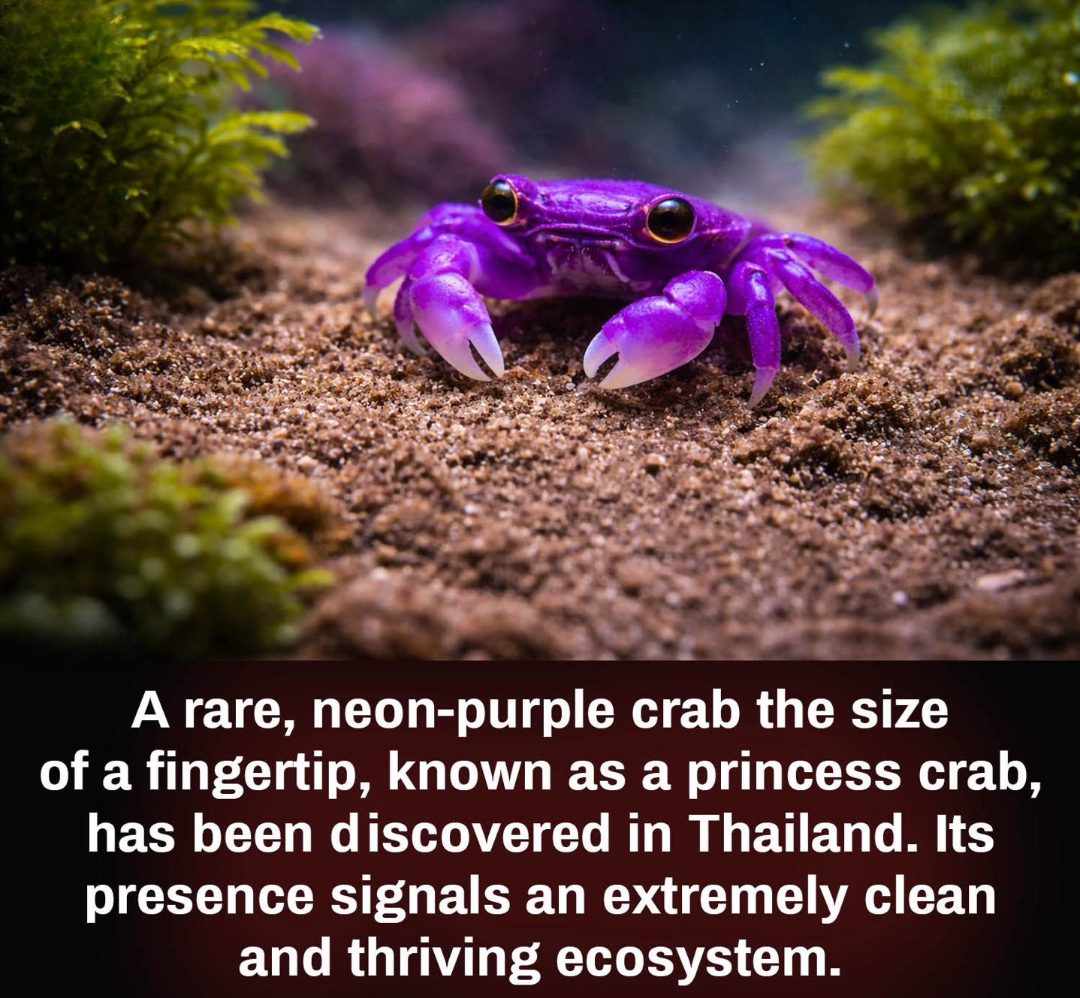
The vivid purple “princess crab” discovered in Thailand is a rare color variant of the panda crab, named in honor of Princess Maha Chakri Sirindhorn. This stunning little crustacean has captured global attention with its eye-catching appearance and the important message it carries about nature’s health.
Locally known as the “Princess crab” or “Sirindhorn crab,” this species pays tribute to Thailand’s Princess Maha Chakri Sirindhorn, a respected figure in the country who has long supported education, science, and conservation efforts. (She notably inaugurated the Natural History Museum at Chulalongkorn University in 1988, which ties into the appreciation for Thailand’s biodiversity.) The name reflects both its regal beauty and the cultural respect embedded in its discovery.
The more common name, panda crab, comes from the species’ typical black-and-white markings that resemble a panda’s face—especially around the eyes, mouth, and claws. Standard panda crabs (scientifically linked to species like Lepidothelphusa cognetti or similar freshwater/semi-terrestrial types) feature this classic contrast, but the purple variant stands out dramatically.
A Rare Purple Jewel in the Forest
Park rangers at Kaeng Krachan National Park in western Thailand spotted these vivid purple crabs near the Panoen Thung checkpoint, just before the area’s seasonal tourist closure. Measuring only about an inch (or less) across the carapace—small enough to perch on a fingertip—these crabs display a striking combination: a white body and claws paired with deep, vibrant purple (or sometimes dark purple-black) on the legs, eye sockets, and other areas. The result is an almost surreal, jewel-like appearance that many describe as “alien-looking” or like a “purple sapphire with legs.”
This purple hue is extremely rare—a sporadic color morph that appears in particularly healthy, moist habitats. The typical panda crab sticks to black-and-white, making this variant a true standout. Sightings are so infrequent that even experienced wildlife experts may go years without encountering one. The species was first documented in Thailand back in 1986 (with some records pointing to earlier findings), but purple individuals remain exceptional.
More Than Just Beauty: A Sign of a Thriving Ecosystem
Thai authorities from the Department of National Parks, Wildlife and Plant Conservation described the sighting as “a precious gift from nature.” Why? These crabs serve as bioindicators. Their presence signals clean water, stable humidity, and an undisturbed environment—key factors in the lush rainforests and waterfall areas where they live. Kaeng Krachan National Park, Thailand’s largest, is a biodiversity hotspot home to elephants, leopards, king cobras, and countless other species. Finding such an elusive creature here underscores the park’s ecological vitality.
In a world facing habitat loss and climate pressures, discoveries like this remind us how much hidden wonder still exists—and how vital protected areas are for preserving it.
Why This Tiny Crab Went Viral
Photos shared by park officials quickly spread across social media, Reddit, Instagram, and news outlets, stunning viewers with the crab’s unreal color. From “NatureIsFuckingLit” communities to global headlines, people marveled at its fairy-tale-like quality. It’s a perfect blend of cuteness, rarity, and royal charm that highlights Thailand’s incredible wildlife.
The princess crab isn’t just a pretty face—it’s a living testament to biodiversity, cultural pride, and the rewards of conservation. Next time you’re exploring Thailand’s national parks (virtually or in person), keep an eye out for these elusive purple gems. They may be small, but their story is mighty.