A Masterclass in Comedy: When Crosby, Hope, and Burnett Shared the Stage
When Bing Crosby and Bob Hope reunited on The Carol Burnett Show for the now-famous “Fan Girl” sketch, audiences weren’t just watching a nostalgic crossover — they were witnessing a lesson in comedic craft delivered by masters of the form.

What made the moment remarkable wasn’t spectacle, flashy jokes, or reliance on reputation alone. The humor emerged from something far more enduring: precise timing, sharp contrast, and the effortless confidence that comes from decades of shared experience. It was comedy built on fundamentals rather than gimmicks, and it showed.
By the time Crosby and Hope walked onstage, their influence on American entertainment was already deeply ingrained. From radio and film to television and live performance, both men had helped define what comedy looked and sounded like for generations. They didn’t need elaborate setups or topical references to win over an audience. Their presence alone — relaxed, assured, and deeply familiar — carried an authority that immediately commanded attention.
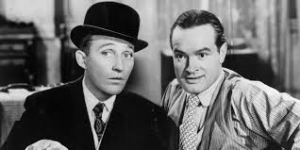

The “Fan Girl” sketch reflected that confidence through its simplicity. Crosby and Hope played heightened versions of themselves: composed, charming, and completely at ease. They projected the calm assurance of performers who had long since mastered the spotlight and no longer felt the need to fight for it. This restraint created the perfect contrast for what followed.
Enter Carol Burnett.
Her fan-girl character exploded onto the stage with unchecked enthusiasm. Loud, intrusive, emotionally volatile, and deliberately excessive, Burnett’s performance was a whirlwind of movement and sound. She shrieked, clung, interrupted, and barreled through the scene with relentless energy, instantly dominating the physical space and demanding attention.
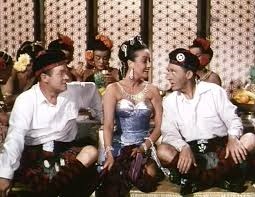
The brilliance of the sketch lay in how Crosby and Hope responded — or rather, how they didn’t. Instead of matching Burnett’s intensity, they countered it with control. Their refusal to escalate the chaos didn’t diminish the humor; it sharpened it.
Bob Hope leaned into his trademark anxious restraint. His reactions were economical and exact: a quick glance, a dry aside, a perfectly timed pause. Each response acknowledged the madness without feeding it, grounding the sketch and maintaining its rhythm. Hope’s genius was always rooted in precision, proving once again that comedy often lands hardest when it’s measured rather than exaggerated.
Crosby took a different but equally effective approach. Calm and unhurried, he allowed silence to do much of the work. His stillness gave Burnett’s frenzy room to breathe, making her extremes feel even more outrageous by comparison. He never chased a laugh, trusting instead that the audience would find humor in his composure. Every pause, every understated reaction reinforced the timeless comedic truth that restraint can be just as powerful as action.
Beyond individual technique, the sketch succeeded because of trust. Crosby, Hope, and Burnett shared an unspoken understanding that allowed each performer to shine without competing for attention. There was no ego on display — only collaboration. Burnett didn’t overwhelm the scene for the sake of dominance, and Crosby and Hope never tried to reclaim control through force. Each beat felt intentional, balanced, and alive.
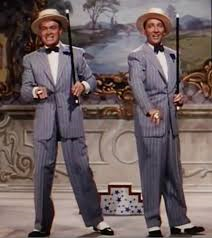
That balance — between preparation and spontaneity — is rare, and it’s why the sketch has endured. Unlike many comedy pieces rooted in their era, this performance hasn’t aged into a relic. It still feels vibrant because it’s built on principles that never expire.
Burnett’s performance deserves equal praise. Her fan girl was chaotic but never careless. Every outburst, gesture, and emotional pivot served the scene. She understood that the joke wasn’t aimed at fandom itself, but at how unchecked enthusiasm collides with composed masculinity. By pushing against Crosby and Hope’s self-assured calm, she revealed it more clearly — without cruelty or mockery.
This sensitivity to relational comedy — humor created through interaction and reaction — is a hallmark of Burnett’s genius. She knew when to press and when to pull back, allowing the laughter to emerge organically from the exchange rather than from one-sided excess.
The sketch also embodied the spirit of The Carol Burnett Show: playful, collaborative, and fearless. Rather than treating legendary guests with reverence, the show invited them to be vulnerable, silly, and fully engaged. Crosby and Hope were encouraged to step outside their polished personas, and Burnett ensured the spotlight was shared rather than seized.
Perhaps most striking is how universal the sketch remains. It doesn’t depend on familiarity with Crosby and Hope’s earlier work, nor does it rely on cultural references tied to a specific time. Its humor is rooted in human behavior — the tension between chaos and control, enthusiasm and restraint. Those dynamics are timeless.
The laughter comes not from surprise alone, but from watching mastery unfold. Each reaction is carefully placed yet feels effortless. Like watching a skilled artist at work, the audience senses the intention behind every choice, even as the final result feels natural and alive.
Crosby and Hope’s long partnership gave them an almost telepathic connection, allowing meaning to pass through glances and pauses. Burnett’s brilliance was recognizing that chemistry and enhancing it without disrupting it. The result was a performance that felt spontaneous but never sloppy, energetic but never unbalanced.

Decades later, the “Fan Girl” sketch continues to resonate because it teaches enduring lessons: the power of contrast, the importance of timing, and the necessity of trust. In an era often dominated by spectacle and speed, it reminds us that great comedy is built on patience, discipline, and collaboration.
Ultimately, the reunion of Bing Crosby, Bob Hope, and Carol Burnett wasn’t just entertaining — it was instructive. It demonstrated how experience, mutual respect, and a deep understanding of craft can elevate a simple premise into something lasting.
The sketch endures not because of nostalgia, but because it showcases artists who knew exactly who they were, trusted one another completely, and understood how to make people laugh by doing less — but doing it perfectly.
In that sense, the “Fan Girl” sketch is more than a comedy routine. It is a timeless study in performance, a reminder that the quiet power of timing, contrast, and trust will always outlast trends, technology, and spectacle.