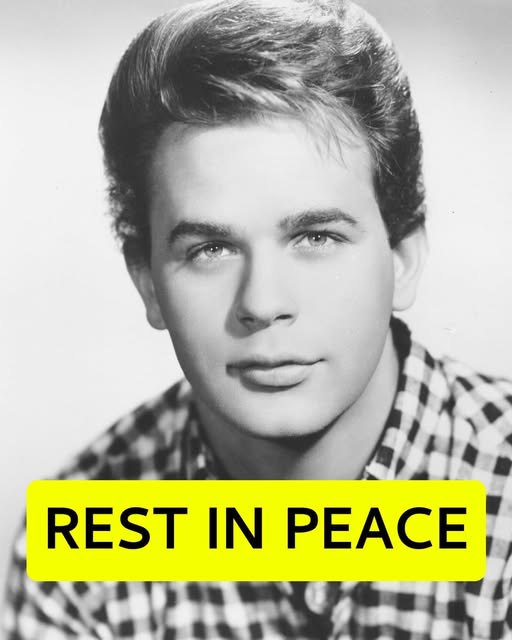
A Beloved Legend Has Left Us, Do You Know Who He Is?
Before his voice ever poured out of radios across the country, before audiences knew him as Lou Christie, he was simply Lugee Sacco—a working-class kid with more questions than answers and a quiet instinct that music might be his way forward. His world was not built on privilege or easy opportunities. It was shaped by modest surroundings, steady routines, and the kind of environment where dreams had to fight to be taken seriously.
What he did have, though, was sound.
Music found him early, not in a dramatic moment, but in the everyday rhythm of church life. Choirs became his first classroom. There, he learned more than melodies—he learned discipline, control, and the subtle power of harmony. Singing alongside others taught him how voices could blend, how emotion could travel through sound, and how even a simple note, held just right, could carry weight.
But it wasn’t until a school Christmas pageant that something shifted permanently.
Standing on that stage, surrounded by decorations and the quiet anticipation of an audience, he felt something he had never experienced before. When the performance ended and applause filled the room, it didn’t just feel like approval—it felt like a door opening. That moment wasn’t just encouraging; it was defining. It planted a certainty in him that performing wasn’t something he wanted to try—it was something he needed.
From that point on, silence was no longer an option.
As the years passed and the landscape of rock and pop music began to evolve, Lugee Sacco became Lou Christie—a name that would soon carry a distinct and unmistakable sound. While many artists worked to fit into emerging trends, Christie moved in the opposite direction. He leaned into what made him different. His voice became his signature, especially his bold, soaring falsetto, which he pushed further than most dared to attempt.
It wasn’t always a safe choice.
Falsetto, used the way he used it, risked sounding too dramatic, too unconventional, too outside the lines of what radio typically embraced. But Christie didn’t aim for safe. He aimed for impact. He wanted his music to feel alive, to surprise listeners, to pull them into something more theatrical and emotionally layered than the standard pop format.
At a time when major labels often dictated direction and controlled access to audiences, he took a more uncertain path. Without the backing of powerful industry structures, he worked in smaller spaces, recording demos in modest studios with limited equipment. A two-track setup was far from ideal, but it was enough. It forced creativity. It demanded precision. It meant that every decision—every note, every arrangement—had to count.
This was where his partnership with songwriter Twyla Herbert became essential.
Together, they didn’t just write songs—they constructed experiences. Their work wasn’t built around simplicity or predictability. Instead, it leaned into complexity, blending emotional storytelling with intricate arrangements that felt almost cinematic. Each track became a kind of miniature drama, filled with tension, release, and unexpected turns.
Songs like “The Gypsy Cried” and “Two Faces Have I” didn’t just follow the rules of pop—they stretched them. They carried a sense of urgency and vulnerability that stood out in a crowded musical landscape. Listeners didn’t just hear these songs; they felt them.
Then came “Lightnin’ Strikes.”
It wasn’t just another release—it was a breakthrough. The song captured everything that made Christie unique: the daring vocal range, the emotional intensity, the willingness to take risks that others avoided. It climbed the charts and secured its place in music history, not because it followed expectations, but because it challenged them.
What made “Lightnin’ Strikes” resonate wasn’t just its technical elements. It was the energy behind it—the sense that it came from somewhere real, somewhere driven by instinct rather than calculation. It carried the echo of that first standing ovation, the same hunger to connect, to be heard, to leave an impression that wouldn’t fade.
And it worked.
Even decades later, those songs haven’t lost their impact. They still feel immediate, still carry a pulse that connects past to present. That kind of longevity doesn’t come from trends—it comes from authenticity. It comes from an artist who was willing to trust his instincts, even when they led him away from what was expected.
Lou Christie’s journey wasn’t built on shortcuts. It was built on persistence, on a willingness to embrace uncertainty, and on a belief that music could be more than background noise—it could be something vivid, something lasting.
What stands out most about his story is not just the success he achieved, but the way he achieved it. He didn’t dilute his voice to fit a mold. He didn’t step back when things felt uncertain. He leaned forward, pushing his sound further, exploring the edges of what pop music could hold.
There’s something powerful about that kind of approach. It reminds us that influence doesn’t always come from the loudest presence or the biggest platform. Sometimes it comes from consistency, from dedication to craft, from the quiet refusal to compromise what feels true.
The boy who once stood on a small stage during a Christmas pageant didn’t know exactly where that moment would lead. But he recognized something important—that being heard mattered. That connection mattered. That music could carry something deeper than entertainment.
And he followed that instinct all the way through.
His legacy isn’t just in the songs themselves, though they remain a lasting testament to his talent. It’s in the way those songs were created—with intention, with risk, with a willingness to stand apart rather than blend in. It’s in the reminder that even the most modest beginnings can lead to something that resonates far beyond its origin.
In the end, Lou Christie’s story is not just about music. It’s about voice—not just the one he used to sing, but the one he chose to trust. It’s about the courage to shape something personal into something universal.
And it’s about the idea that a single moment—a child standing on a stage, hearing applause for the first time—can echo for a lifetime, reaching further than anyone could have imagined.