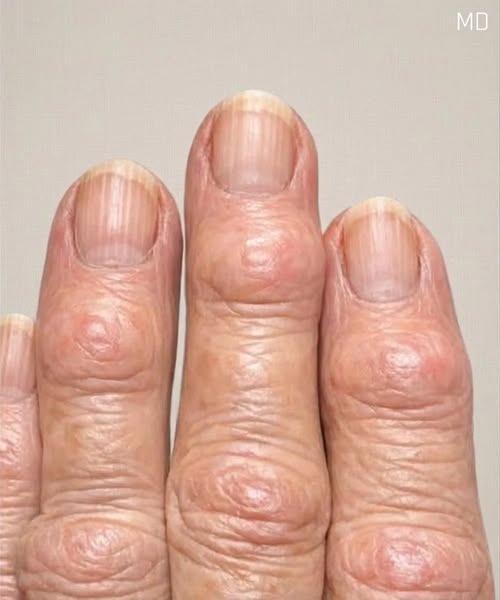
On the joints of her fingers, close to the nails, my grandmother is developing these hard lumps. What’s causing this to spread?
As people grow older, the body naturally changes in ways that can sometimes feel unfamiliar or concerning. One common change many notice is the appearance of firm bumps on the finger joints, especially near the fingertips. These bumps may look unusual and can occasionally cause discomfort, leading people to wonder what they mean for their health. In most cases, these growths are not dangerous but are part of a condition related to normal aging and joint wear over time.
These bumps are typically known as nodes and are most often associated with osteoarthritis, a condition in which the protective cartilage in joints gradually breaks down. The most common type, called Heberden’s nodes, forms on the joints closest to the nails. As cartilage wears away, the bones begin to rub against each other, and the body responds by creating extra bone to help stabilize the joint. This process results in the firm, visible bumps that can make the skin appear slightly stretched or shiny. These changes are more frequently seen in women, particularly after midlife.
As osteoarthritis progresses, more than one finger may be affected, and the bumps can become more noticeable over time. Factors such as genetics, aging, and repeated use of the hands can influence how the condition develops. Alongside the visible changes, some individuals may experience stiffness, mild pain, or reduced flexibility in their fingers. Everyday tasks like writing, opening jars, or fastening buttons may feel more challenging, especially during colder weather or after periods of inactivity when joints tend to stiffen.
Although there is no complete cure for osteoarthritis, there are many ways to manage symptoms and maintain comfort. Gentle hand exercises, warm or cold compresses, and supportive tools can help reduce discomfort and improve mobility. Over-the-counter pain relief options may also be useful when needed. Maintaining an active lifestyle and using ergonomic tools can support long-term joint health. If symptoms become severe or begin to interfere with daily life, consulting a healthcare professional is important. With proper care and awareness, most people can continue to use their hands comfortably and stay active in their daily routines.