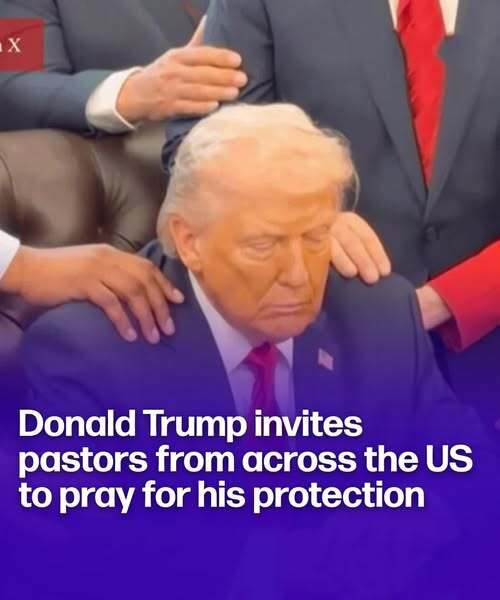
Trump asks US clergy to offer prayers for his safety.
The world was on fire, yet the room was quiet.
Missiles were already in the air, and worries about a bigger conflict were growing hourly as pastors surrounded Donald Trump in the White House. Some witnessed a country turning to God. Others perceived a risky conflation of power and pulpit. Online debates erupted, spi.
In that now-viral Oval Office moment, the image of pastors laying hands on a sitting president during an international crisis became more than a snapshot; it became a symbol. For supporters, it captured a leader humbling himself at a time when U.S. troops and allies faced real danger across the Middle East. They saw the prayer for wisdom, protection, and guidance as not only appropriate, but necessary, in the shadow of missile strikes and retaliatory attacks.
Critics, however, worried about the merging of religious authority and military decision-making. To them, the quiet words over Trump’s bowed head contrasted sharply with the roar of weapons and the risk of regional escalation. Yet beneath the outrage and applause was a shared unease: a recognition that lives hung in the balance, and that every choice in Washington could ripple across a region already stretched to the breaking point.