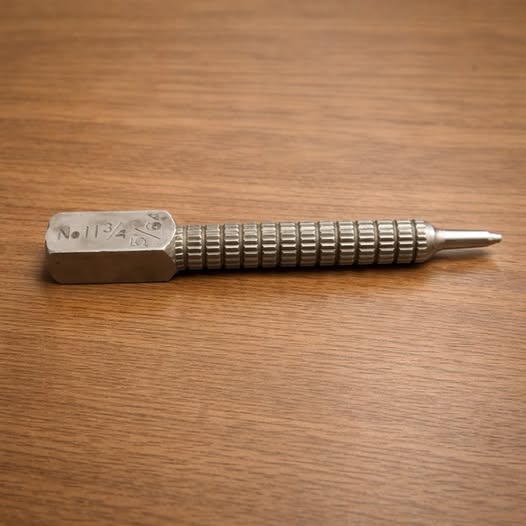
Only those who have been around for a long time will recognize this as a remnant from the past!
Introduction: A Well-Known Instrument With a Greater Narrative
If you have ever looked through an old family toolbox, you could have come upon a little metal tool with a sharp point and deep grooves. That instrument is frequently a vintage Stanley punch, a traditional hand tool that was formerly thought to be essential in homes, garages, and workshops.
Even in an era of laser guides and modern gadgets, the Stanley punch remains a symbol of hands-on skill, careful work, and reliable craftsmanship.
What It Is: The Vintage Stanley Punch
The Vintage Stanley punch is a precision marking tool used to create a small indentation (a “dimple”) in a surface—most commonly metal or wood.
That indentation helps:
- Guide a drill bit so it doesn’t slip
- Keep drilling accurate and centered
- Prevent mistakes that can damage the workpiece
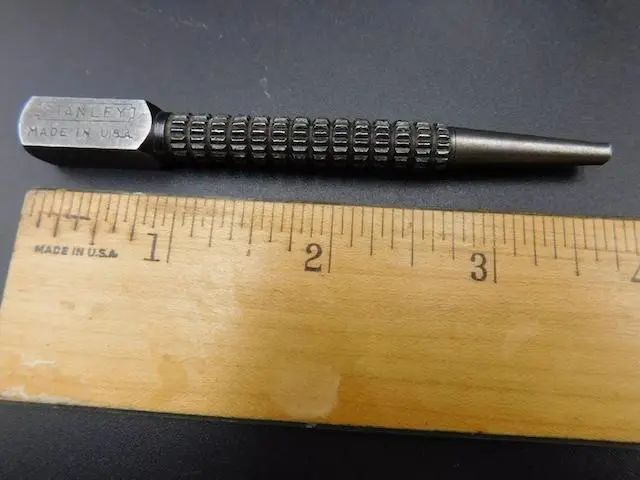
How It Works: Simple, Reliable, Effective
Traditional punches like this were designed for manual use:
- Place the punch tip exactly where you want the hole to begin
- Hold it steady using the knurled (textured) grip
- Strike the top with a hammer to create a clean starting mark
- Drill with confidence, because the bit now has a true starting point
This may sound like a small step, but in real projects it often made the difference between a clean result and a ruined piece.
Design Features That Made It a Classic
What made the Vintage Stanley punch so widely trusted was its practical, durable build:
- Hardened steel body built to tolerate repeated hammer strikes
- Knurled grip for secure handling, even with gloves
- A sharp, precise tip designed to mark tough or slippery surfaces
- Built to last long enough to be passed down across generations
Everyday Uses: Why It Belonged in “Every Home”
The Stanley punch wasn’t limited to professionals—it was valuable anywhere people repaired, built, or maintained things.
Common users and purposes included:
- Carpenters: marking drill points for screws or nails to reduce cracking and misalignment
- Metalworkers: creating a starting point on metal where drill bits can easily wander
- Mechanics: guiding drilling, helping with tough materials, and supporting rivet or fastener work
- DIY homeowners: weekend fixes, furniture repair, picture hanging, and garage projects
For many people, it became a quiet “helper” tool—always there, always useful.

Why Vintage Tools Still Fascinate Us
Tools like the Vintage Stanley punch remain popular because they represent:
- Simplicity with purpose (no extra features—just results)
- Durability over disposability
- The satisfaction of doing work with skill and care
Holding one can feel like holding an artifact from a time when products were built for long service, not short replacement cycles.

Historical Role: A Symbol of Self-Reliance
The Vintage Stanley punch reflects an era when home improvement was closely tied to identity and pride—especially during the mid-20th century, when many households embraced DIY culture and practical self-sufficiency.
It wasn’t just “a tool.” For many families, it became:
- A rite of passage for learning basic hands-on skills
- A familiar sound in the garage—the metallic ring of hammer on steel
- A bridge between generations, passed from parent to child along with practical knowledge
Conclusion: Small Tool, Lasting Impact
The Vintage Stanley punch may look modest, but its role was anything but small. It helped ensure accuracy, cleaner workmanship, and fewer mistakes—one careful strike at a time.
If you ever find one tucked away in an old toolbox, it is worth a pause. You are not just holding a punch—you are holding a piece of everyday history built around precision, durability, and pride in doing things well.