A Birthday Celebration Turns Deadly in Quiet Suburban Neighborhood
Tragic News: At Least Four Dead
By the time the final gunshot faded into the stillness of a quiet suburban street, a birthday cake sat untouched. Its candles remained unlit, their small white wicks catching the late-afternoon light—a haunting contrast to the innocence that had just been shattered.
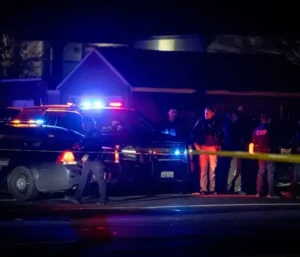
Only moments earlier, the gathering had felt ordinary and joyful. Balloons swayed softly in the backyard, children laughed as they ran between folding tables, and the familiar scent of vanilla frosting mixed with freshly cut grass. Parents chatted casually, phones in hand, snapping photos and sharing smiles, unaware that the afternoon was about to take a devastating turn.
When the gunfire erupted, normalcy collapsed instantly. Parents reacted on instinct, shoving children to the ground behind cars, wrapping their bodies around them as terror took hold. Some whispered desperate prayers, eyes clenched shut as if sheer will could keep their children safe. Others froze where they stood, unable to process the violence unfolding in front of them, staring at the house as bullets tore into its walls—each impact a brutal interruption of what should have been a celebration.
The sensory clash was overwhelming. The sweetness of frosting lingered in the air, now mixed with the sharp, metallic smell of blood. Smoke from a barbecue drifted nearby, blending with the coppery scent, while cries from frightened children, shouts from neighbors, and the distant wail of sirens merged into a surreal chorus of chaos.
In Stockton, California—a city more accustomed to everyday routines than sudden bloodshed—time seemed to stop. Streets usually alive with bicycles, barking dogs, and neighborly greetings fell into an eerie quiet. For hours, the area felt suspended between noise and silence, the stillness weighed down by disbelief and grief.
Local hospitals were quickly overwhelmed. Families rushed in, some clutching phones displaying messages that confirmed their worst fears, others guiding children who had witnessed the shooting, their hands trembling as they held onto a parent’s sleeve. Medical staff moved swiftly and efficiently, but even seasoned doctors and nurses struggled under the emotional weight of the situation. Patients were triaged in hallways, waiting rooms overflowed, and anxious relatives paced endlessly. Security officers escorted families into private rooms, speaking softly, their own expressions strained.
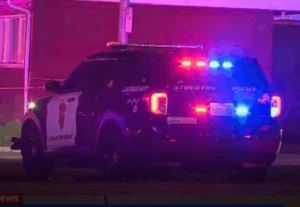
Back at the scene, police began the painstaking work of investigation. Detectives reviewed grainy surveillance footage from nearby homes, replaying frames again and again in search of a face, a vehicle, any small detail that could provide a lead. Yellow crime scene tape crisscrossed the neighborhood as officers stood watch at every corner, radios crackling, weapons slung across their shoulders.
Police dogs searched cars and yards, occasionally stopping as if catching a scent only they could detect. Neighbors gathered nearby, many carrying flowers, candles, and stuffed animals. With trembling hands, they placed the offerings at the edge of the taped-off area, whispering prayers and words of sorrow, careful not to cross the barrier yet unable to stay away.
A child’s birthday banner still hung in the yard, its bright letters fluttering gently in the breeze. Each movement was a painful reminder of what should have been—a simple celebration of life—now transformed into a scene of devastation.
Residents described the neighborhood as close-knit and peaceful, a place where families had lived for years, children walked to school together, and weekend barbecues were routine. The idea that such violence could erupt here felt impossible, yet the reality had destroyed that sense of safety in seconds. Community leaders soon addressed the tragedy, offering condolences, promising support services, and calling for unity, though no words could fully ease the collective wound.
Inside the damaged home, forensic teams worked carefully and methodically. Shell casings, fingerprints, and bloodstains were documented and collected. Investigators moved with deliberate care, gloves and masks in place, their professionalism occasionally giving way to visible emotion—a pause at a blood-stained toy, a brief tremble while cataloging birthday cards scattered across the floor.
What had once been a home filled with laughter had become a silent testament to senseless violence.
Counselors and social workers arrived at hospitals and community centers, providing immediate support to families in shock. Child psychologists guided parents on how to talk to their children, emphasizing reassurance, routine, and a sense of safety in the days ahead. Volunteers from churches and local organizations brought blankets, water, and food, offering comfort to families and first responders alike.
The city’s emergency management team set up a command center to coordinate law enforcement, medical response, and public communication, working to share accurate information and prevent rumors from spreading.
Media coverage was extensive but cautious. Reporters stayed at a distance as helicopters hovered overhead, capturing images of yellow tape, flickering candles, and grieving crowds. Online, social media filled with prayers, tributes, and messages of solidarity, even as misinformation threatened to complicate the investigation.
For first responders, the emotional toll was heavy. Officers and medics who had faced countless emergencies spoke quietly of a burden they hadn’t anticipated—one that lingered long after the scene was cleared.
What remained was a community forever changed, left to mourn lives lost and to grapple with how a moment of unimaginable violence could overtake an afternoon meant for celebration.