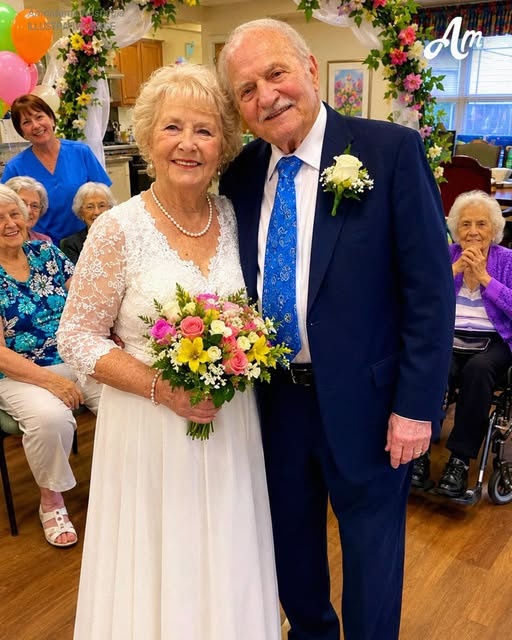
A Wealthy Widower from a Nursing Home Asked Me to Marry Him
I was a poor widow living in the state-funded wing of our nursing home. The radiator hissed but gave no real warmth, and the thin glass rattled against the cold wind. From my cramped, shared room, I often gazed across the manicured courtyard toward the glowing penthouse suites where the wealthy residents lived. That courtyard was the only place our two worlds ever touched.
It was under the old oak tree that I first met Arthur. He was an elegant man of eighty-two, arranging chess pieces with patient precision.
“You look like someone who understands a good game,” he said.
“I understand losing gracefully,” I replied. “That is what poverty teaches you.”
He laughed warmly and gestured to the empty chair. “Then sit. I haven’t lost gracefully in years. I could use the practice.”
That afternoon stretched into hours. He had his private chef send imported tea, which I sipped slowly, embarrassed by my worn slippers and tiny pension.
“You keep apologizing for your shoes,” Arthur noticed.
“They’re all I have.”
“Shoes carry people to interesting places,” he said. “Yours carried you to me. That makes them valuable.”
From then on, we met daily beneath the oak tree, listening to old jazz records and trading stories of regrets. He told me about his late wife; I told him about the children I never had.
“You have three children,” I reminded him once. “Where are they?”
“They don’t care about me,” he said bitterly. “They’re just waiting for me to die.”
I reached across the table and covered his hand. “Then let’s play chess and not think about storms today.”
“You’re the only person here who wants nothing from me,” he said softly.
“I want to win a game before I die,” I teased.
“That,” he chuckled, “you’ll have to earn.”
Arthur’s cough worsened as winter deepened. One morning, Gregory—his eldest son—burst into the room with Evelyn and a team of lawyers.
“Father, we need to talk about your care,” Gregory announced coldly. “This place is bleeding money.”
Arthur’s eyes sharpened. “My money is mine to spend. I don’t recall inviting you.”
The lawyers presented papers to petition the court for guardianship. Gregory sneered at me: “Who exactly are you? The charity case from the state wing? This is a family matter.”
“She stays,” Arthur said firmly. “She’s the only one who visits me because she wants to.”
When they left, Arthur whispered, “They’ll be back with a judge. They’ll declare me incompetent.”
“Then we fight them first,” I said.
He looked at me with desperation. “Marry me. If we marry, I can sign a healthcare directive naming you as my agent. Gregory won’t be able to touch me.”
“Arthur, people will say I’m after your money.”
“Let them. I trust you more than anyone.”
We married three days later in his suite. A chaplain performed the ceremony, and Arthur signed the directive in front of witnesses. Evelyn appeared briefly at the doorway, silent, then slipped away.
When Gregory’s lawyers returned, Mr. Vance, Arthur’s attorney, met them at the door. “You’re too late. Arthur signed a directive naming his wife as his medical agent. It is legally binding.”
Gregory’s fury was useless. For two years, Arthur and I lived peacefully together, reading aloud in the evenings and watching the sun dip below the oak tree.
Last week, Arthur passed away quietly. I thought the storm had ended. But after the funeral, Mr. Vance arrived with a thick manila envelope.
“Arthur trusted me with everything,” he said. “Including this.”
Inside were documents that stunned me. Arthur had placed the entire nursing home into a trust. The building, the land—everything. And I was the sole beneficiary.
I stared at him. “That’s impossible. Arthur was just a resident here.”
“No,” Vance explained. “He purchased the facility eleven years ago. He lived in the penthouse as an ordinary guest so no one would treat him differently. He wanted to protect the people in the state-funded wing—the people the world forgets.”
Evelyn stepped into the room. “He noticed you long before he spoke. He asked me to help him in secret. Gregory planned to demolish the state wing and build luxury condos. Father couldn’t let that happen.”
Tears filled my eyes. “I thought I was only protecting a lonely friend.”
“You were,” Evelyn said. “And he was protecting you—and hundreds of others—right back.”
Gregory stormed into the penthouse days later, lawyers at his side. He tossed an eviction notice onto the table.
“Pack your bags, old woman. The estate reverts to me.”
I slid the deed across the table. “Read this before you say another word.”
His face drained of color. “This is fake. Father would never—”
“Your father owned this entire facility,” Vance said calmly. “His widow is now the sole owner. Your claim is worthless.”
“You manipulated a dying man!” Gregory shouted.
“No,” Evelyn said firmly. “I helped him. He knew exactly what you planned.”
Gregory looked at his sister with rage. “You went behind my back.”
“Someone had to,” she answered.
Mr. Vance closed his briefcase. “There is nothing left for you here.”
Gregory muttered threats but left without another word.
Weeks later, I stood by the courtyard window, watching workers repair the crumbling state wing. Warm light finally reached the rooms where I once shivered.
“Arthur,” I whispered, “your dream is safe now.”
And for the first time in years, I felt at home.