Donald Trump Responds to Rumors About a 22-Foot Statue at His Golf Club
The unveiling of a new statue honoring Donald Trump at his Florida golf resort quickly became one of the most discussed political and cultural moments of the week. Supporters gathered at Trump National Doral to witness the presentation of the large golden monument, which depicts Trump raising his fist following the assassination attempt that occurred during a 2024 campaign rally. The statue immediately sparked conversation online, drawing reactions from political supporters, critics, religious leaders, and media commentators across the country.
For many attendees, the event represented more than a piece of artwork. They viewed it as a symbol connected to resilience, survival, and the political movement that has surrounded Trump for nearly a decade. The ceremony itself was relatively private, attended by a small gathering of invited guests, donors, and organizers who helped fund the project. Reports indicated that cryptocurrency investors and several prominent supporters contributed financially to bring the statue to life.
Sculptor Alan Cottrill, who created the monument, reportedly agreed to complete the project for approximately $300,000. According to previous interviews, Cottrill explained that delays in payment caused the statue to remain stored in a warehouse for a period of time before the unveiling finally took place. Despite those challenges, the final presentation attracted major attention once images and videos from the event began circulating online.
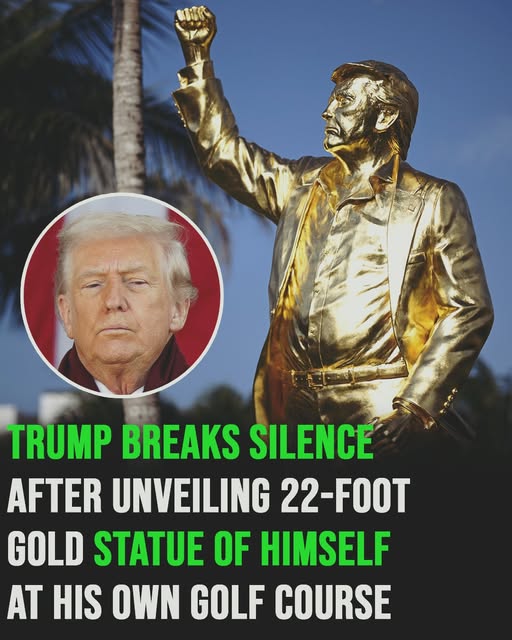
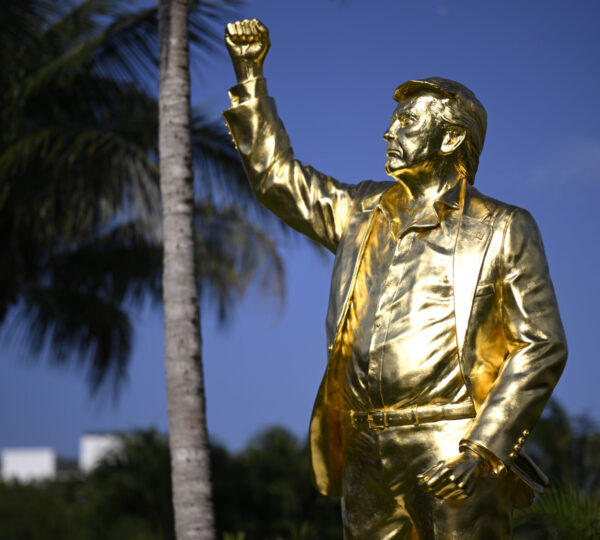
Standing approximately 22 feet tall, the golden statue was designed to recreate one of the most recognizable moments from Trump’s 2024 campaign trail. The sculpture captures the moment he raised his fist after surviving the rally incident that shocked the nation and dominated headlines around the world. For supporters present at the ceremony, the image symbolized determination and perseverance under pressure.
Others viewed the display as another example of the intense loyalty and personality-driven culture that has become closely associated with modern American politics. Regardless of political opinion, the unveiling generated widespread discussion due to both the size of the statue and the symbolism attached to it.
One of the most vocal figures at the event was Mark Burns, a pastor associated with the group Pastors for Trump. Burns addressed criticism surrounding the statue and attempted to clarify the purpose of the monument. Some social media users compared the display to idol worship or referenced biblical imagery involving golden statues and false idols. Burns strongly rejected those comparisons during remarks shared online. He emphasized that attendees were not worshipping Trump and insisted that the statue was intended to honor what supporters considered a historic and emotional moment in American political history.
In statements posted publicly after the unveiling, Burns described the statue as a representation of strength, patriotism, and perseverance. He stated that supporters viewed Trump’s survival following the assassination attempt as evidence of divine protection and resilience.
Burns also thanked the thousands of donors who reportedly contributed to the project and praised the volunteers and organizers involved in arranging the ceremony. His comments reflected the strong emotional connection many supporters continue to feel toward Trump and his political movement. The pastor repeatedly stressed that the event was not religious worship but rather a public celebration tied to political symbolism and national identity.
The ceremony also included a message from Trump himself. According to reports from attendees, Trump addressed the crowd through a phone call that was played aloud during the event. In his remarks, he thanked Burns and the organizers for their support and acknowledged the effort that went into creating the statue. Trump reportedly described the project as something done “from love,” expressing appreciation for the loyalty shown by his supporters over the years. His brief comments quickly spread across social media platforms, where supporters praised the gesture while critics questioned the tone and scale of the tribute.
As often happens with highly public political events, reactions online became deeply divided. Supporters described the statue as inspiring and symbolic, particularly because it referenced a moment they believed changed the course of the 2024 election cycle. Many attendees viewed the unveiling as a celebration of survival and persistence during a politically turbulent period in the country’s history.
Photos and videos from the event showed guests taking pictures beside the statue, applauding speeches, and discussing Trump’s influence on modern conservative politics. For many of them, the monument represented not just a politician but an entire movement built around ideas of defiance, nationalism, and political disruption.
Critics, however, responded very differently. Some commentators questioned the decision to create such a large gold statue while political and economic tensions continue across the country. Others argued that the imagery surrounding the event appeared excessive or overly focused on personality rather than policy. Social media quickly filled with debates over whether the unveiling reflected admiration, political branding, or something more controversial.
Religious discussions also emerged online because of the statue’s appearance and comparisons made to biblical stories involving golden idols. Those conversations became especially heated after images from the event circulated widely across television broadcasts and digital news platforms.TV & Video
Despite the controversy, the unveiling highlighted how deeply influential Trump remains within American political culture. Years after first entering national politics, he continues to generate intense reactions from both supporters and opponents. Public events connected to him often become larger cultural discussions involving media, religion, celebrity influence, and national identity.
The statue ceremony in Miami reflected that reality clearly, becoming far more than a simple art presentation. Instead, it evolved into a symbol interpreted differently depending on political perspective, personal beliefs, and public opinion.
The event also demonstrated how political imagery has become increasingly powerful in the digital age. A single photograph or symbolic moment can rapidly spread across the internet, shaping public conversation within hours. Images of the statue standing at Trump National Doral immediately appeared across social media feeds, news articles, political commentary shows, and online forums.
Supporters used the images to celebrate Trump’s endurance and leadership, while critics used the same photos to question the growing culture surrounding political personalities in America. The speed and intensity of those reactions showed how visual symbolism now plays a major role in shaping political narratives.
For attendees at the ceremony, however, the focus remained personal and emotional rather than political analysis. Several supporters described the event as meaningful because it represented survival during a moment of national shock and uncertainty. Others spoke about their admiration for Trump’s ability to continue campaigning after the assassination attempt.
While opinions about the statue itself remain sharply divided, there is little doubt that the unveiling succeeded in capturing national attention and sparking widespread discussion about politics, symbolism, and leadership in modern America.
In the days following the ceremony, discussions about the statue continued across television programs, podcasts, news websites, and social media channels. Analysts debated whether the monument reflected a changing political culture increasingly driven by branding and spectacle. Others argued that large public monuments honoring political figures have existed throughout history and that the Trump statue simply reflects modern forms of political expression. Regardless of perspective, the event once again demonstrated Trump’s unmatched ability to dominate headlines and public conversation.
Ultimately, the unveiling of the golden statue at Trump National Doral became more than just a local gathering in Florida. It became a national talking point touching on politics, loyalty, religion, symbolism, media influence, and public identity. Supporters viewed the moment as patriotic and inspiring, while critics viewed it with skepticism or concern. Yet both sides agreed on one thing: the statue immediately became unforgettable. Whether praised or criticized, it succeeded in doing exactly what major political symbols are designed to do — command attention, create emotion, and keep the national conversation focused squarely on Donald Trump.