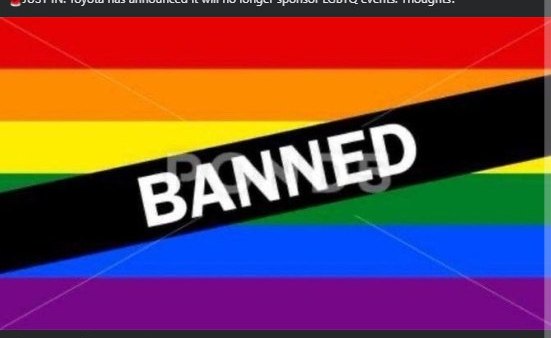
Announces Major Shift in U.S. Diversity, Equity, and Inclusion Policies, Halting Sponsorship of LGBTQ+ Events
Toyota Announces Major Shift in U.S. Diversity, Equity, and Inclusion Policies, Halting Sponsorship of LGBTQ+ Events
Toyota Motor Corp. has made a significant policy change regarding its corporate social initiatives in the United States. In an internal memo distributed on October 3, 2024, the Japanese automaker informed approximately 50,000 U.S. employees and more than 1,500 dealerships that it will no longer sponsor cultural events and parades, including those associated with LGBTQ+ communities such as Pride parades and festivals.
The memo explicitly states that Toyota will narrow its community activities to focus exclusively on areas aligned with STEM education (science, technology, engineering, and mathematics) and workforce readiness. This decision marks a clear departure from the company’s previous involvement in broader diversity, equity, and inclusion (DEI) programs, which had included sponsorship of various cultural events not directly tied to its core business objectives.
According to the communication, the move comes in response to what the company describes as “a highly politicized discussion” surrounding corporate commitments to DEI initiatives. Toyota emphasized that while it remains committed to fostering an inclusive environment where diversity of thought can flourish, its primary responsibility is to support activities that directly contribute to business growth, technical skill development, and preparing the future workforce.
As part of the refocus, Toyota will also end its participation in notable corporate culture surveys and rankings, including the annual Corporate Equality Index conducted by the Human Rights Campaign (HRC), an LGBTQ+ advocacy organization. In previous years, Toyota had received high scores in such evaluations, including a perfect 100 in the 2023 index, reflecting its earlier strong support for LGBTQ+ workplace policies and community programs.
The announcement follows intense public scrutiny from conservative activist Robby Starbuck, who launched a social media campaign in late September 2024 targeting Toyota’s involvement in various DEI-related efforts. Starbuck criticized the company for sponsoring events such as Pride parades, supporting employee resource groups focused on LGBTQ+ issues, and other initiatives he labeled as “woke.” He called on customers to boycott Toyota vehicles unless the company changed course.
In the weeks leading up to the memo, Toyota had initially defended some of its programs by noting that many were employee-led through its business partnering groups (affinity networks) rather than direct corporate mandates. The company has over 14 such groups with more than 116 chapters and thousands of members. However, the October memo indicates a broader strategic pivot away from these areas.
This development places Toyota among a growing list of major corporations that have scaled back or restructured their DEI commitments in recent years. Companies in sectors ranging from retail to automotive have faced similar pressures from both consumers and activists on opposite sides of the political spectrum. Some observers view these shifts as a response to changing public sentiment and potential impacts on sales, particularly in key markets where conservative buyers form a significant portion of the customer base.
Toyota, one of the world’s largest automakers and a long-time leader in hybrid and electric vehicle technology, has historically maintained a reputation for stability and customer focus. The company has long emphasized “The Toyota Way,” a philosophy centered on respect for people, continuous improvement, and operational excellence. In the memo, executives appear to tie the new direction back to these foundational principles, suggesting that community engagement should support long-term business sustainability rather than broader social or cultural causes.
Prior to this change, Toyota had actively participated in Pride Month activities. In June 2024, the company published content on its official website highlighting stories from LGBTQ+ employees and celebrating the diversity within its workforce. It had also sponsored various Pride events across the U.S., including in major cities, and supported organizations focused on LGBTQ+ issues.
The decision has sparked widespread reactions across social media and news outlets. Supporters of the move have praised Toyota for prioritizing business fundamentals and avoiding divisive political territory. Critics, including LGBTQ+ advocacy groups, have expressed disappointment, arguing that withdrawing sponsorship sends a negative message to employees and communities that have benefited from such support over the years. Some have called for renewed dialogue on corporate responsibility in promoting inclusive workplaces.
Toyota has not issued a broad public statement beyond the internal memo, and the changes appear limited to its North American operations at this time. There has been no indication of similar policy shifts in other global markets, including Europe or Japan.
Industry analysts note that this type of refocus reflects a broader trend among corporations navigating polarized environments. As debates over DEI continue, companies are increasingly evaluating whether certain initiatives align with their core mission and shareholder expectations. For Toyota, the emphasis on STEM education and workforce development may also tie into its need for skilled talent in advanced manufacturing, electrification, and autonomous vehicle technologies.
The full impact of the policy change on Toyota’s brand perception, employee morale, and sales remains to be seen. However, the swift response following activist pressure demonstrates how quickly social media campaigns can influence corporate decision-making in today’s interconnected world.
In summary, Toyota’s announcement represents a deliberate strategic adjustment aimed at depoliticizing its community involvement and concentrating resources on education and workforce programs that directly support its long-term growth as a leading automotive manufacturer. The company continues to affirm its commitment to an inclusive workplace while drawing clearer boundaries around sponsorship activities.